 ŽiburioFoundation
On September 19, 2026, during the 65th anniversary Mass of the Lithuanian Catholic Religious Aid organization in Lemont, Cardinal Rolandas Makrickas called for a new generation of sowers who would support young people and Christian culture.
2026 m. rugsėjo 19 d., Lietuvių katalikų religinės šalpos 65-mečio Mišiose Lemonte, kardinolas Rolandas Makrickas kvietė naują sėjėjų kartą, kuri remtų jaunimą ir krikščionišką kultūrą.
The program takes its name from the nineteenth-century Lithuanian knygnešiai, who carried prohibited books during the Russian press ban so Lithuanian texts could continue to circulate and be read. Today, students carry that responsibility forward by documenting books already held by their community.
It begins at a pivotal moment between completing Lithuanian heritage school and leaving for college, when a young person’s regular connection to the Lithuanian community can easily fade.
The program stands at a shared threshold. Its students are moving into adult life, while cultural memory itself is entering a world in which knowledge will be found, understood, and carried forward in new ways. The two questions are inseparable: How do we transform our cultural memory into living knowledge for the world now taking shape, and how do we prepare young people to enter and shape that world responsibly?
By giving graduates meaningful responsibility—researching, digitizing, creating, and working with frontier AI technologies—the program makes cultural continuity something they help shape, not simply something they inherit.
Skaitmeniniai knygnešiai – Žiburio lituanistinės mokyklos inicijuota programa, tęsianti istorinę knygnešių misiją naujoje terpėje.
Kaip spaudos draudimo laikotarpiu knygnešiai užtikrino lietuviško žodžio ir tapatybės išlikimą, taip šiandien moksleiviai, pasitelkdami dirbtinį intelektą ir mobiliuosius įrenginius, perkelia lietuvių diasporos kultūrinę atmintį į skaitmeninę erdvę.
Gimnazijos amžius yra paskutinis etapas, kai lituanistinė mokykla gali giliai įtraukti jaunimą. Daugelyje mokyklų po 8 klasės mokiniai pasitraukia. Nuo 8-os klasės iki universiteto – nieko.
Programa prasideda ties slenksčiu: mokinys eina į suaugusiojo gyvenimą, o tautos atmintis — į pasaulį, kuriame žinios bus randamos, suprantamos ir perduodamos naujaip. Du klausimai neatskiriami vienas nuo kito.
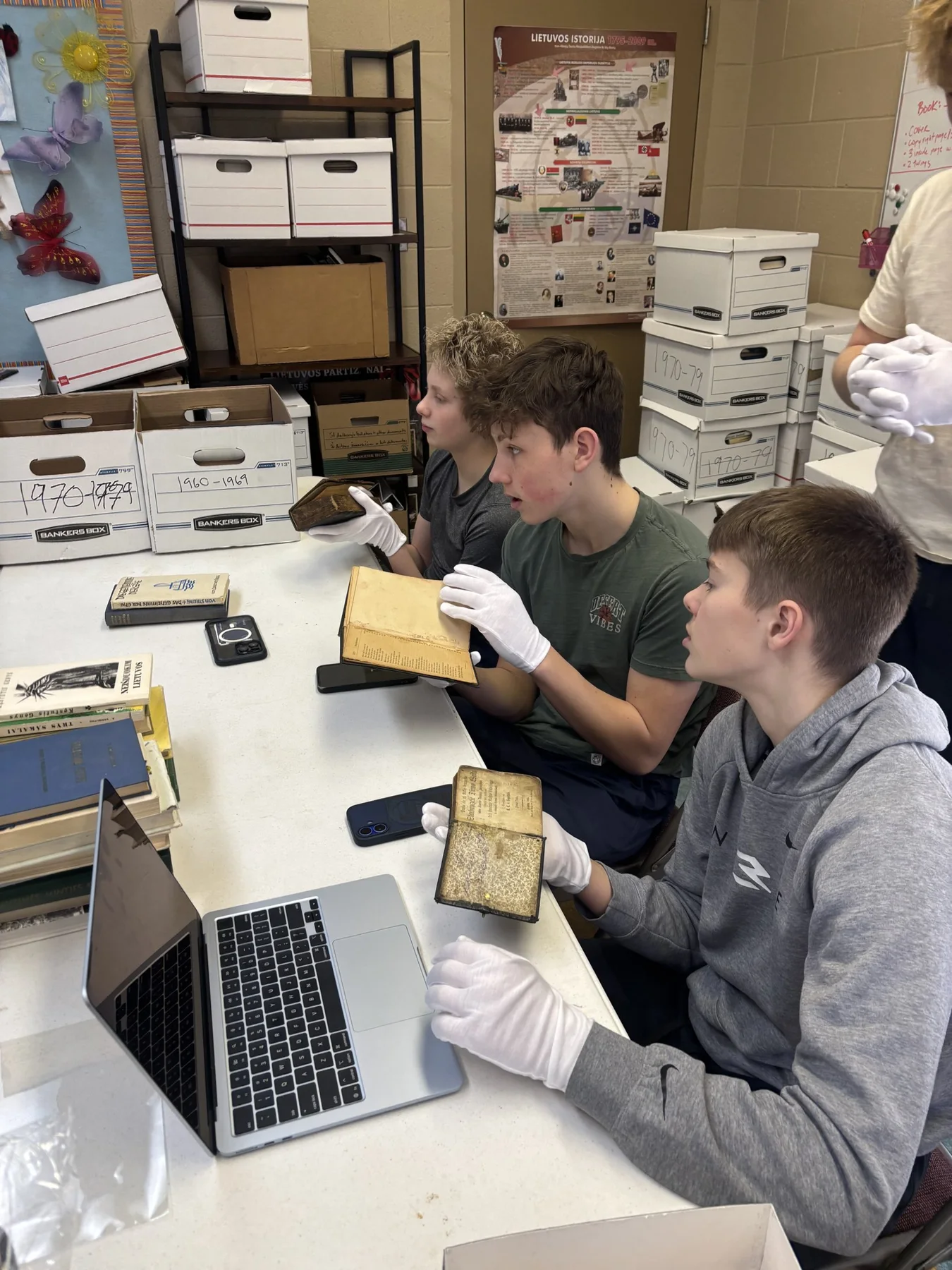
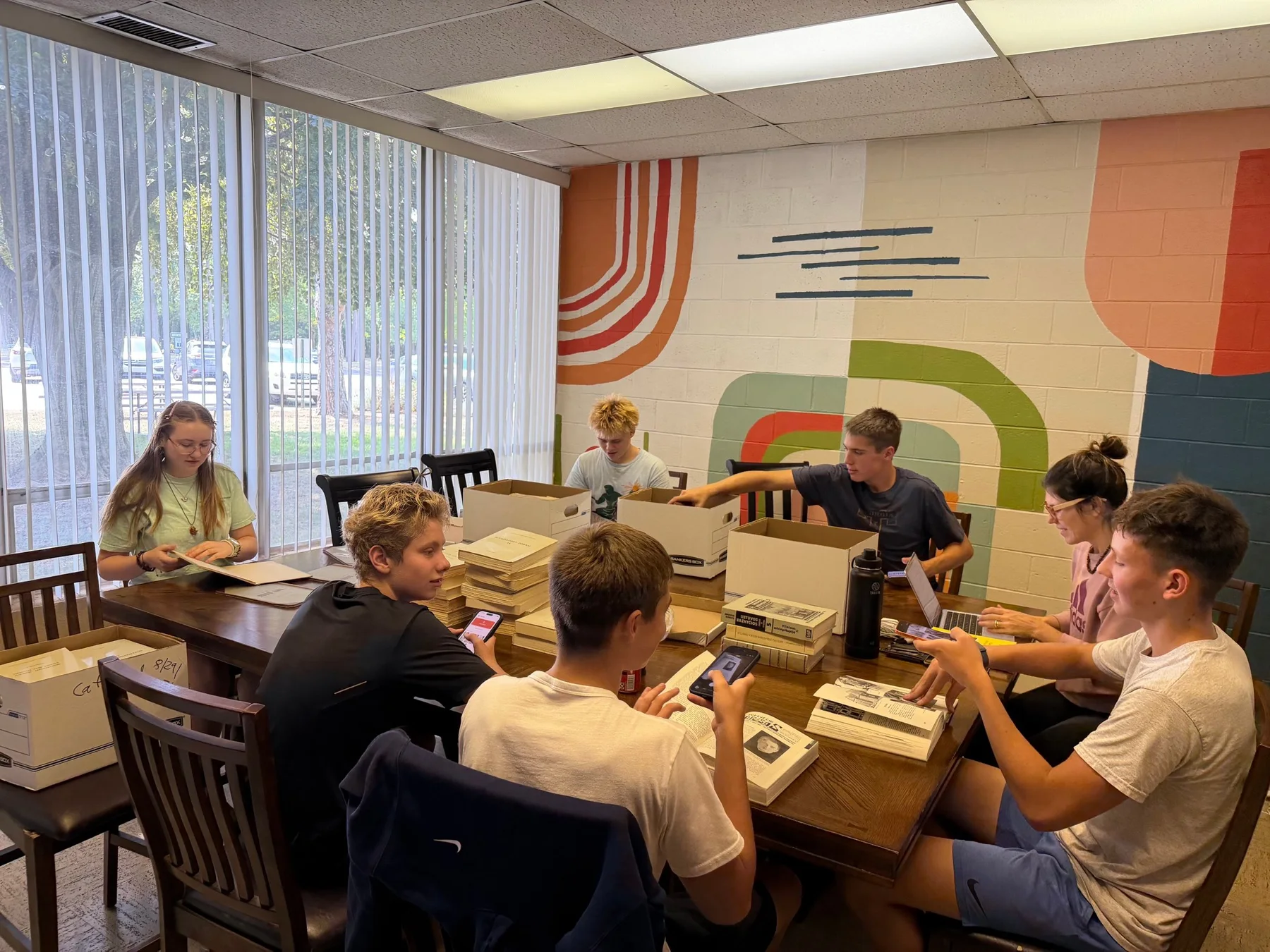
Seven Žiburio Lithuanian School students are participating in Skaitmeniniai Knygnešiai — Digital Book Carriers, an internship that gives young people responsibility for preserving and researching Lithuanian diaspora memory. They are digitizing and cataloguing the archive at Divine Providence Lithuanian Church, including approximately 4,000 books and historical publications, while also researching the people, parishes, and institutions connected to them.
Through Save Our Lithuanian Parishes, they are helping document 155 Lithuanian parishes, missions, and congregations across the United States. The work is already expanding beyond Detroit as new materials and connections emerge from other Lithuanian communities.
The goal is not simply to put old documents online. It is to understand what these communities built, why some survived and others disappeared, what has already been lost, and what may still be saved.
The internship also gives students a new place within the Lithuanian community at a critical moment—after graduation from Lithuanian heritage school and before college. They are no longer only inheriting this history. They are helping research, interpret, and carry it forward.
Artificial intelligence helps them work across thousands of pages and uncover connections, but human judgment remains at the center. Students verify sources, examine evidence, and connect every conclusion back to the historical record.
Komandoje dirba septyni Žiburio mokyklos abiturientai, Dievo Apvaizdos parapijos nariai. Jie yra tos tradicijos, kurią saugo, paveldėtojai. Dirba šeštadieniais nuo 2025 m. rudens.
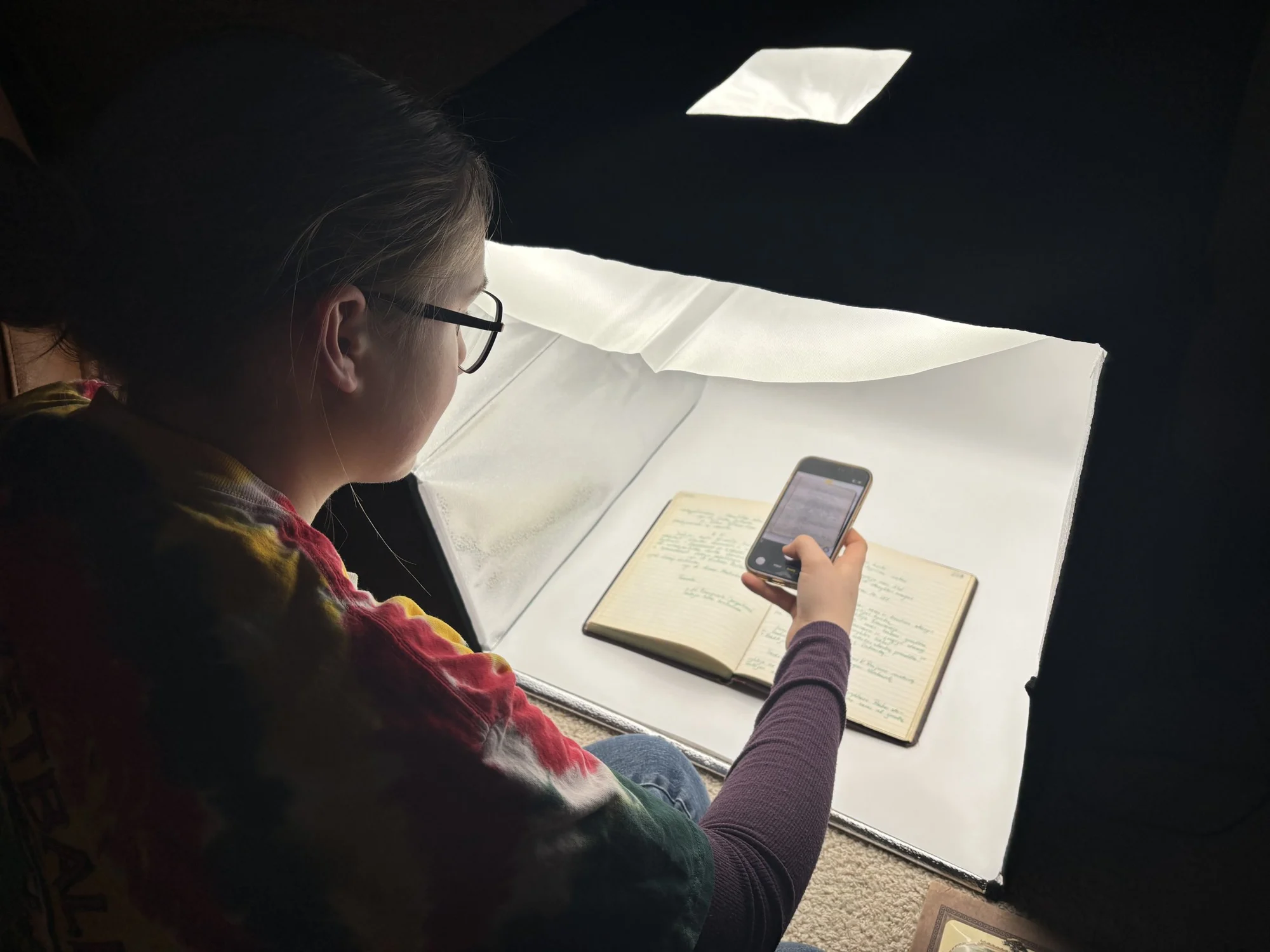
Stažuotojas fotografuoja knygą telefonu per programėlę → AI „Vincas“ analizuoja ir ištraukia kontekstą → administratorius peržiūri → knyga pasirodo viešame kataloge su istorine, kultūrine ir pedagogine informacija.
Tai ne OCR – tai kontekstualizavimas: kiekviena knyga aprašoma su istorine, kultūrine ir pedagogine informacija, kuri daro archyvą naudingą mokytojams ir tyrėjams.
Kartu su „Save Our Lithuanian Parishes“ jie padeda aprašyti 155 JAV lietuvių parapijas ir kitas įstaigas.
Tai ne prototipas – tai jau veikia.
The original knygnešiai carried Lithuanian books across borders to preserve language, faith, and identity. Today’s Digital Book Carriers are carrying that memory from paper into the digital world, where the next generation will look for it.
Istoriniai knygnešiai saugojo lietuvišką žodį. Šiandien turime išsaugoti lietuvišką atmintį. Šis darbas užtikrina, kad ji bus ne tik išsaugota, bet ir perduota – per jaunimą.
The Foundation’s youth work is essential, not peripheral. Students who photograph a book, trace ownership, compare contradictory records, interview elders, and write grounded interpretations are also learning how historical knowledge is made. Their participation strengthens the human layer of memory that software cannot replace.
Computers can remember far more than people, but storage is not understanding. A student who receives an AI-generated history has not necessarily learned how historical knowledge is established.
Young people work in contact with primary sources. They learn to distinguish an artifact from its transcription, a quoted fact from an inference, an institutional narrative from an individual witness, and an unanswered question from an invitation to invent. AI can accelerate translation, discovery, and cross-source comparison, but should not automatically substitute for reasoning.
Stažuotojai įgyja technologinius įgūdžius, archyvinio darbo pagrindus ir gebėjimą analizuoti istorinius šaltinius. Bet svarbiausia – formuoja asmeninį ryšį su lietuviška tapatybe.
Kai gimnazistas katalogizuoja DP stovyklos knygą, kurią jo senelis galėjo laikyti rankose – jis tampa knygnešiu kitoje epochoje.
Dvikryptis darbas: moksleiviai moko dirbtinį intelektą atpažinti detales, o jis moko juos suprasti kontekstą. Sprendimas lieka mokinio rankose.
Jie suvokia save ne kaip pasyvius kultūros vartotojus, o kaip aktyvius saugotojus.