 ŽiburioFoundation
Our programs are connected by a common purpose: to make Lithuanian cultural memory available for study, meaningful to new generations, and capable of informing the future.
Visus darbus jungia vienas tikslas: kad lietuviška atmintis būtų prieinama tyrėjui, suprantama jaunam žmogui ir naudinga ateičiai.
01
The Internship Stažuotė
In the nineteenth century, Lithuanian knygnešiai carried prohibited books across borders to preserve the Lithuanian language and its written culture. Today, a new generation faces a different responsibility.
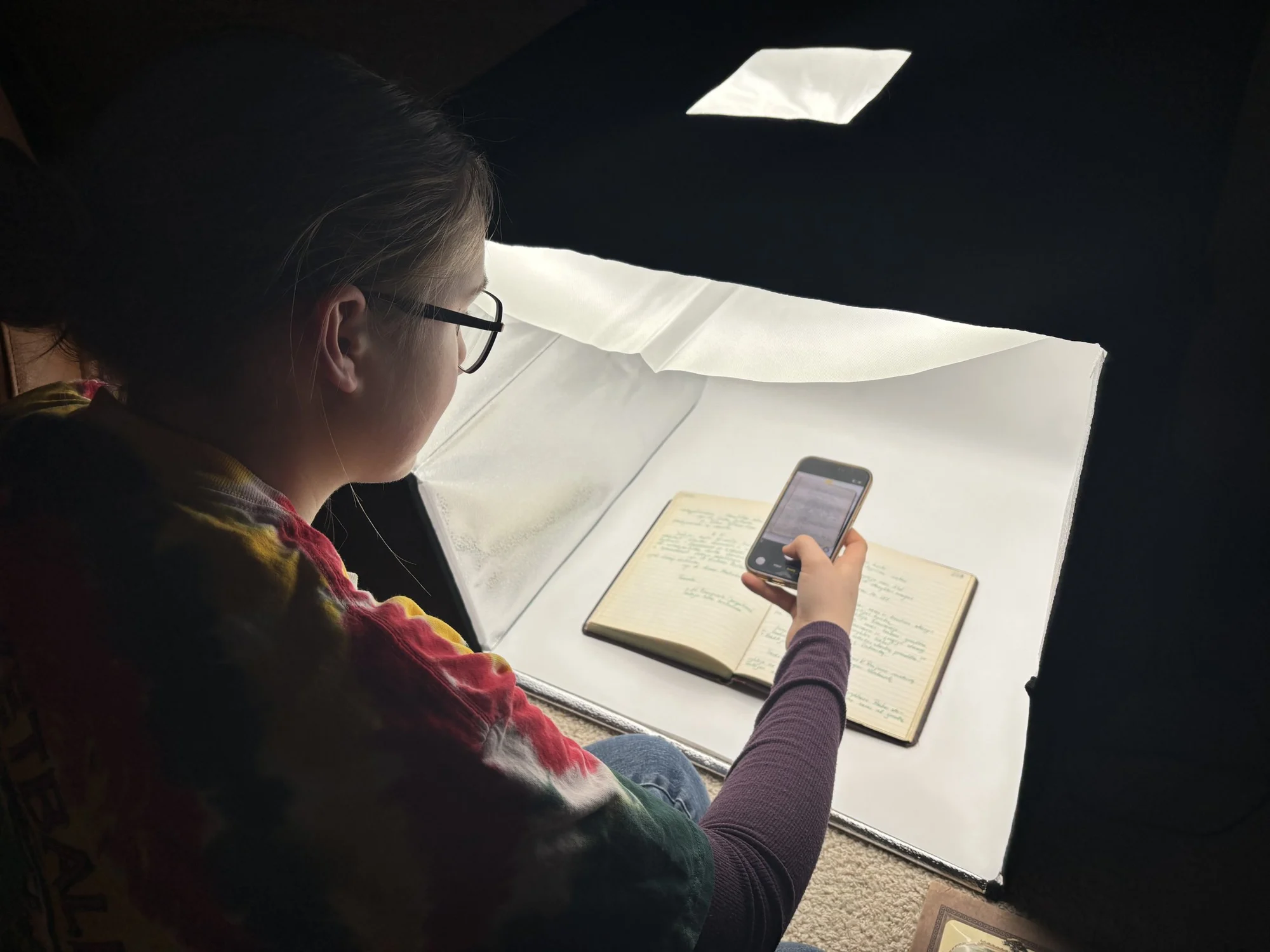
Through our Skaitmeniniai Knygnešiai program, young people work directly with historical books, periodicals, documents, and audiovisual records. They learn to digitize, investigate, contextualize, and publish primary sources while developing Lithuanian language skills, historical understanding, and technical competence.
Artificial intelligence becomes an instrument of their work, not a substitute for their judgment.
The purpose is not simply to teach young people new technologies. It is to prepare them to become responsible inheritors and creators of Lithuanian culture.
Skaitmeniniai knygnešiai – Žiburio lituanistinės mokyklos inicijuota programa, tęsianti istorinę knygnešių misiją naujoje terpėje.
Kaip spaudos draudimo laikotarpiu knygnešiai užtikrino lietuviško žodžio ir tapatybės išlikimą, taip šiandien moksleiviai, pasitelkdami dirbtinį intelektą ir mobiliuosius įrenginius, perkelia lietuvių diasporos kultūrinę atmintį į skaitmeninę erdvę.
Septyni „Žiburio“ abiturientai fotografuoja, katalogizuoja ir tiria Dievo Apvaizdos lietuvių parapijos archyvą.
02
The Archive Archyvas
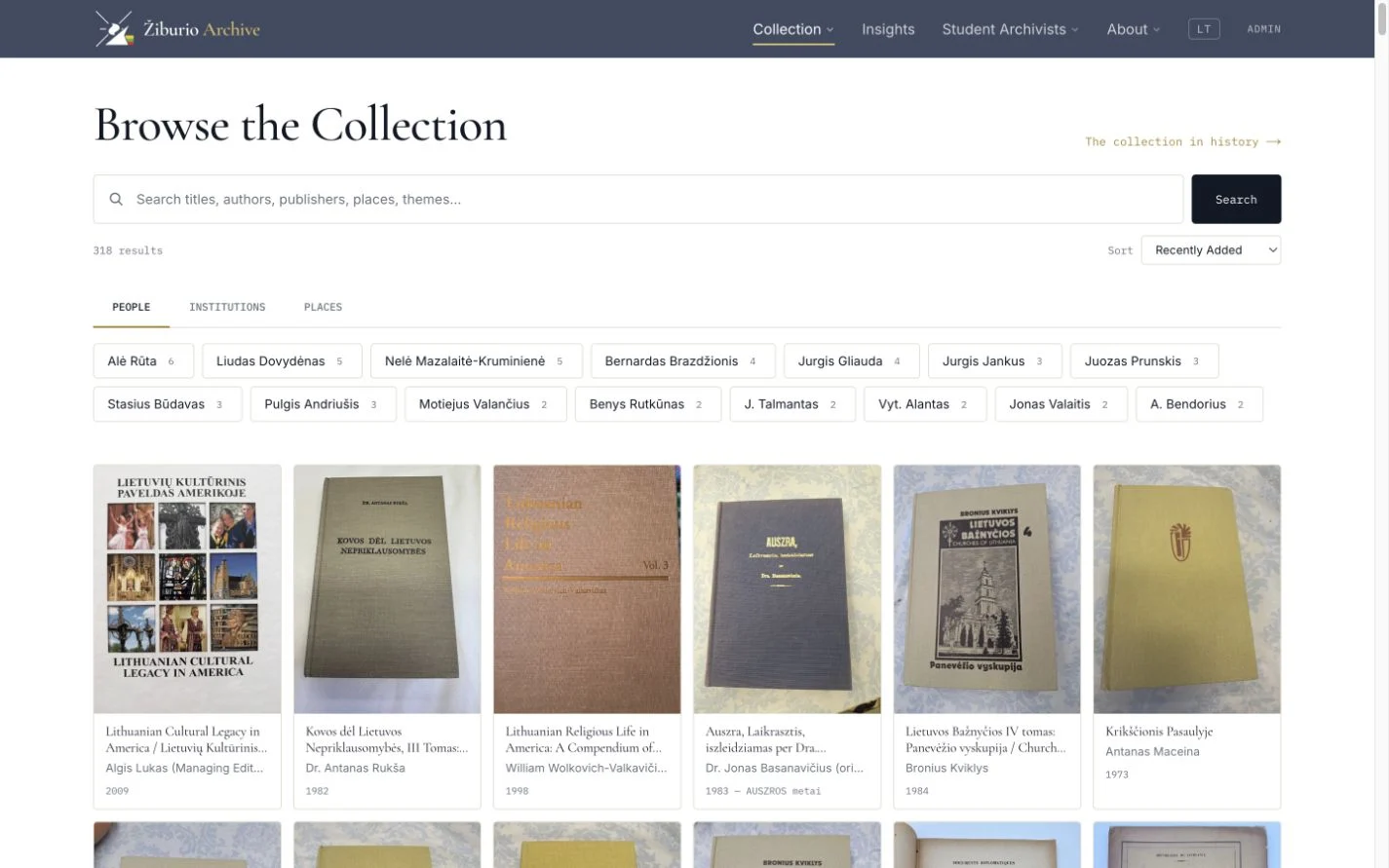
The Žiburio Archive brings together Lithuanian books, periodicals, documents, and other historical materials preserved by the Detroit Lithuanian community. These collections record the intellectual, religious, educational, and civic life of generations who maintained Lithuanian culture beyond the borders of Lithuania.
The Foundation works to preserve original materials, document their provenance, and make them accessible for scholarship, education, and public use.
The archive is also the foundation of a broader effort to connect dispersed Lithuanian collections while respecting the identity, rights, and stewardship of each collection. Through Lietuva.ai, sources are connected across collections, institutions, places, people, and generations — while provenance, attribution, and the distinction between documented fact and machine-generated inference are preserved.
Every source has an origin. Every record belongs to a history. Both must remain visible.
Kiekviena knyga archyve yra atminties vienetas, kuris egzistuoja, turi struktūrą ir atskleidžia tiesą apie žmones, kurie ją sukūrė ir perdavė.
Diasporos archyvai yra visos lietuvių tautos paveldas. Viešas katalogas: 326 vieši įrašai iš 513 sukataloguotų.
Lietuva.AI jungia lietuvių kultūros įrašus su žmonėmis, vietomis ir istorijomis, kurias jie liudija. Šaltiniai lieka matomi, atsakomybė — žmogaus rankose.
03
Learning and creating from our past Mokomės ir kuriame iš savo praeities
Preserving a source is the beginning. The Foundation also studies what these records contain and makes new work from them — research, writing, and publications that return the record to the community in a form people can use.
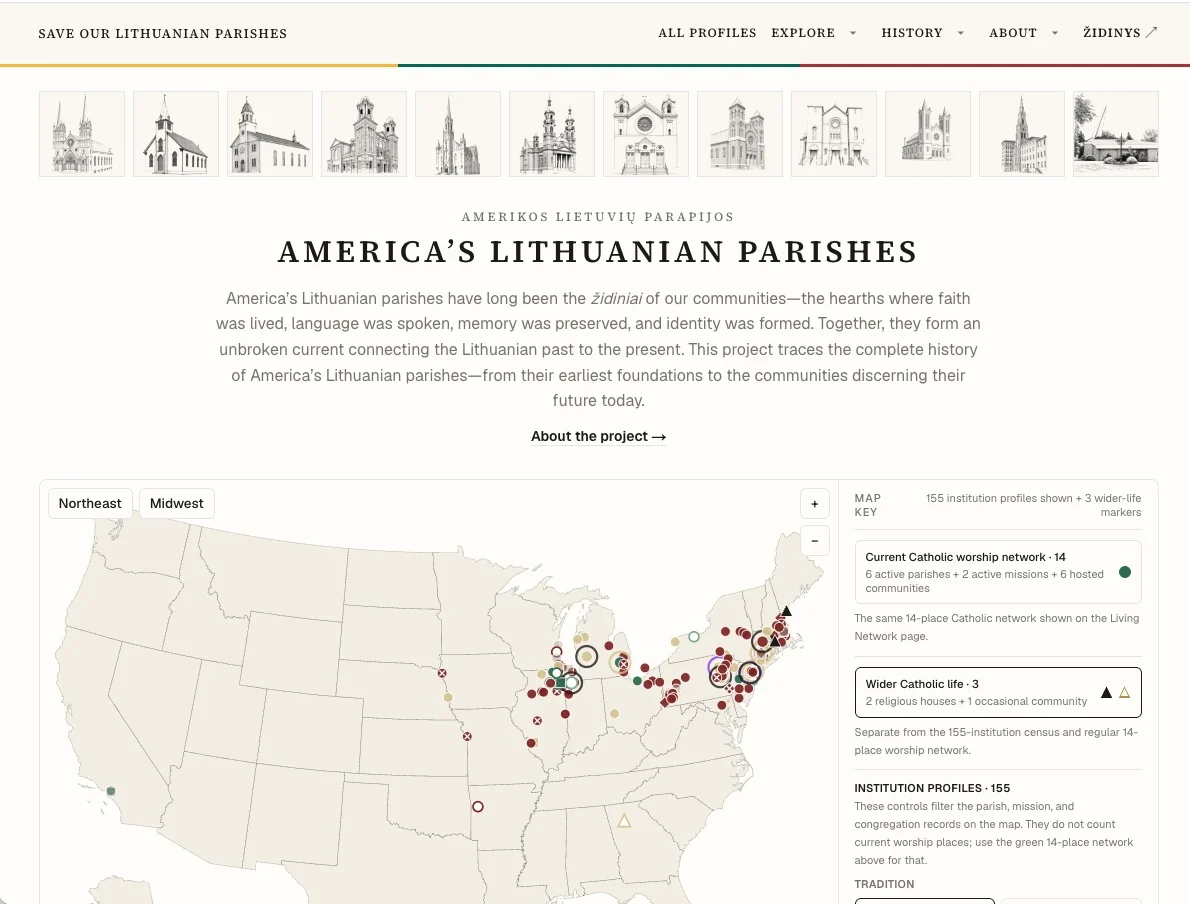
Save Our Lithuanian Parishes documents the institutions that sustained Lithuanian life in the United States. For generations these parishes were more than places of worship: they were centers of education, language, cultural organization, mutual assistance, and community life, and their schools, societies, libraries, and archives helped sustain Lithuanian identity across generations.
As these institutions close or change, much of their history is at risk of disappearing. The project combines historical research, documentary evidence, and community engagement.
We study these institutions not only to understand what they preserved, but to understand how cultural continuity was built—and what its future requires.
JAV lietuvių parapijų registras, kuriame aprašytos 155 parapijos ir kitos įstaigos.
Parapijos buvo ne vien maldos namai. Jose veikė mokyklos, draugijos, bibliotekos, archyvai — jos laikė lietuvišką gyvenimą per kartas. Uždaromos parapijos, išsisklaido bendruomenės, o kartu su pastatais nyksta ir jų istorija.